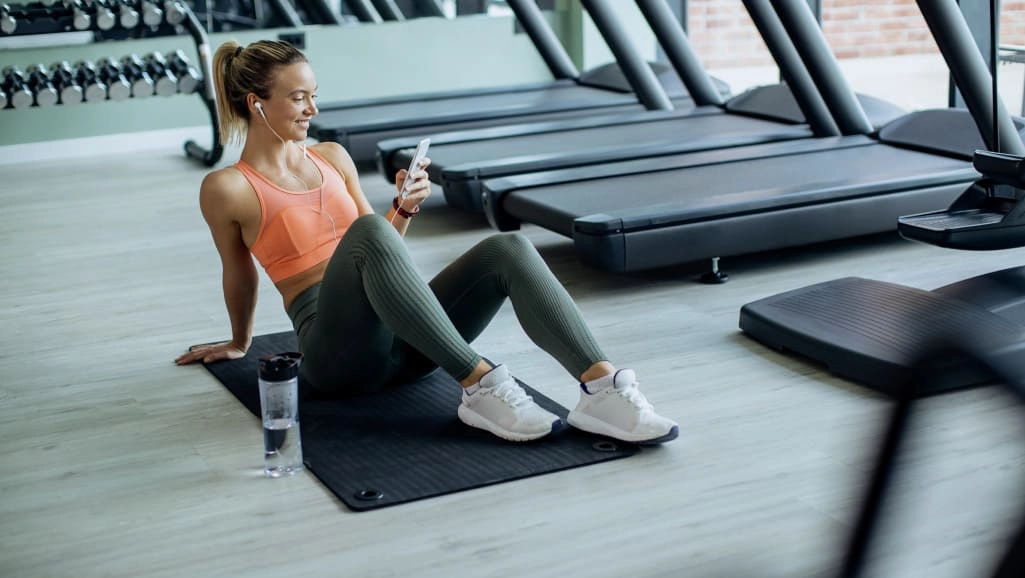
Five steps to starting your career as a personal trainer
The chance to do what you love, set your own working hours, and enjoy a healthy lifestyle in both your personal and work life are reasons enough to start a business. If you've worked out for a long time yourself — whether in group classes, at the gym, or even in your own living room at home — it's no wonder that at some point you start wondering whether your hobby could become your job. But how do you turn that thought into reality? We've put together five concrete steps to help turn the dream into reality.
So many possibilities!
Opening a sports club is an idea that's crossed many people's minds. The first step is to make sure this is really what you want. Still think sports isn't for you? No problem — here we've introduced another small business idea, how to start your own cleaning company: https://esto.eu/ee/article/idee-vaikeettevotte-loomiseks-koristusfirma.
But getting back to sports, the second part of the first step is setting your direction:
What types of workouts do you plan to run, and what equipment and space will you need for that?
Do you even need your own space and equipment, or would it be smarter to rent the space and gear?
Do you want to open a gym that's open to everyone, or more of a space where you train one person at a time?
If you want maximum freedom to decide things your own way, your own personal training space is the best option. The biggest difference between working out alone at home and going to a sports club is that the latter has professional trainers on hand to help with advice and support.
Start by developing yourself
Luckily, Estonia offers personal trainer courses that meet various standards and requirements. You can pick up some knowledge on your own, but don't underestimate official courses — that's where you build a solid foundation for your knowledge. Personal trainer courses usually cover the basics of several areas:
nutrition and supplements
exercises
physiology
anatomy
injuries
using training equipment
Successfully completing a course from the Estonian Bodybuilding and Fitness Federation also gets you an official trainer qualification. An official qualification comes in handy if you plan to work with government institutions or apply for grants. The other two bigger, better-known course options are FAF and Intensive PT. Before you settle on one or the other, feel free to look into their background and other people's experiences.
The downside of courses, of course, is that you have to pay for them, and quite often the best courses are also the most expensive. If your savings aren't enough to cover a course, or you'd rather hold on to them, you don't have to shelve the plan. ESTO, which offers flexible payment solutions, can help both with completing your courses and with the next step — sorting out equipment and space.

Take care of your work-life balance with ESTO Switch.
Give your clients the best
As a personal trainer, you get to choose what you focus on. Yoga, dance, and several other types of training are, luckily, ones that need little equipment, which is easy to choose. Picking the right equipment for strength training can be harder, even if you've spent a long time at the gym yourself.
What should you think about when setting up your first gym?
Universal isn't always best. Despite a name that promises endless possibilities, universal machines quickly hit their limits. It's the classic situation: "good for everything" is, at best, "good for about ten things." That's why we want to highlight simpler, and actually more versatile, options instead.
Dumbbells offer a truly wide range of uses, so they could be your number one pick. Thinking about your future clientele will also help you decide what weight range to keep your dumbbells in. Weights in the 1-10kg range suit beginners, while a 15-25kg selection offers more options for more advanced clients.
Next up — an adjustable incline bench. Thanks to its adjustability, you can do a whole range of different exercises on it. And if you make the right choice, it also works as a step bench, which opens up even more options!
Third, choose a barbell and weight plates. You definitely don't need to pick the most expensive plates, but you don't have to settle for uncomfortable Soviet-era equipment either. You might also want to consider a squat rack. Squats and bench presses are two exercises that, combined, cover a large number of muscle groups. And although both can be done without a rack, a dedicated squat rack makes the exercises safer thanks to its safety bars.
A treadmill, stair climber, exercise bike, and rowing machine all take up space, and quality models are expensive. That's why we recommend holding off on buying these machines at first. It's much more practical to do cardio exercises on your own at the start, without a machine — outdoors, for example. But even if you skip buying a cardio machine, you might still find yourself in a situation where your existing savings aren't enough.
There's always money out there, you just need to find it
A mindful approach generally helps cut costs. When buying sports club equipment, it's also worth considering reuse that's friendly to both nature and your wallet. Quite often, equipment for sale is in downright perfect condition, but because someone has used it a little, the price is already noticeably lower. For you, that's pure financial gain!
But even making the most of reuse, this isn't a project you can get off the ground without any cost at all. You'll need to pay for courses, renting space, and equipment. One way is to save the money up yourself, which can take longer than you'd like. Another option is to use a loan and invest in your own future.
ESTO's credit line is a flexible solution — borrow exactly as much as you need and pay interest only on the amount used. For the first 30 days after signing the agreement, you can make withdrawals interest-free. You can make repayments at your own pace, based on a flexible payment schedule. That way you keep an eye on your monthly expenses.
How do you find clients?
Looking for clients can seem tricky at first, but luckily that's just an early hurdle. Don't forget that you don't have to start out full-time right away. Personal training work can start out as a hobby or even a side job, while your main job still gives you the financial security you need.
As a rule, once you have a few clients, word starts to spread and new interested people show up too. Naturally, that means you need to offer a quality service. It's not enough to simply love working out yourself and to have picked up bits and pieces here and there.
As a personal trainer, you need thorough knowledge so you can choose and explain exercises properly. Clients are so different, after all! What works for one won't work for another, so stay flexible when working with the people you train. Along with knowledge and experience comes observation skill: you'll be able to watch a client and not just notice when they're doing something wrong, but also know how to correct it.
The main thing is that your own eyes light up — that makes it very easy to keep developing yourself, picking up new information, and passing your knowledge and skills on too. On top of everything else, a good personal trainer is also a fantastic salesperson and a great communicator.
Before signing the agreement, review the terms and conditions and, if needed, consult a specialist. ESTO AS's credit account annual percentage rate of charge is 49.22% per year under the following sample terms: credit limit 4000 EUR, non-fixed initial (maximum) interest rate 40.70%, contract fee 0 EUR, monthly administration fee 0 EUR, total amount of credit and total repayment amount 5467.67 EUR, assuming the credit is drawn down immediately in full and repaid over 60 months in equal monthly instalments.